
An HRV system is a heat recovery ventilator: a small box that swaps stale indoor air for fresh outdoor air while holding onto most of the heat you’ve already paid for. It isn’t a heater or an air conditioner. It’s the thing that lets you open your rig’s lungs in January without letting all the warmth escape.
That’s the part people mix up when they search “HRV system HVAC.” Your HVAC heats and cools. Your HRV ventilates, and it borrows energy from the outgoing air to pre-warm the incoming air. In a van or RV, where cooking, showering, and just breathing can fog every window by morning, that’s a bigger deal than it sounds.
I learned this the hard way during a cold, damp stretch when I woke up to water beading on the ceiling and a musty smell I couldn’t shake. Cracking a window fixed the air but sent my heater into overdrive. Sound familiar?
This guide breaks down how an HRV works, how it differs from an ERV, whether it actually makes sense for your rig, and what to know before buying and installing one. We’ll keep it plain and practical, the way we’d explain it around a campfire.
What an HRV System Actually Does (In Plain English)

How Heat Recovery Works Without the Jargon
Picture two thin hallways running side by side, separated by a wall that’s only a few millimeters thick. Warm, stale air from inside your rig travels down one hallway on its way out. Cold, fresh air from outside travels down the other on its way in. They never mix, but that thin wall lets heat slide across from one to the other.
That wall is the core, and it’s where the magic happens. The core recovers heat from exhaust and hands it to the incoming stream, so on a frosty morning the air arriving inside has already been pre-warmed. In summer, it flips: the outgoing cool air takes some of the heat off the incoming air, giving you a head start on cooling.
Think of it like handing a warm mug to a friend who just walked in from the snow. You’re not swapping the coffee, just sharing the warmth. Your heater or AC still does the heavy lifting, but it isn’t starting from scratch every time fresh air comes in.
HRV vs. ERV: Which One Fits Your Climate?
Here’s the quick difference: an ERV does everything an HRV does, plus it moves some moisture between the two airstreams. That small extra trick changes which one suits your travels.
In humid places like the Gulf Coast or the Southeast in summer, an ERV helps keep damp outdoor air from flooding in, so your air conditioner isn’t fighting humidity all day. In cold, dry climates, an ERV can hold onto some of the moisture you naturally produce, which keeps the air from getting uncomfortably dry. An HRV, on the other hand, tends to shine in cold, damp winters, because it sends moisture outside with the stale air, which is exactly what you want when condensation is the enemy.
If you’re leaning toward an ERV, our guide on how to install an ERV walks through the process.
One honest note: units built for vans and RVs are still limited, and what’s available changes. Always check the manufacturer’s specs for mobile use before you buy.
HRV vs. Your Existing HVAC: How They Work Together
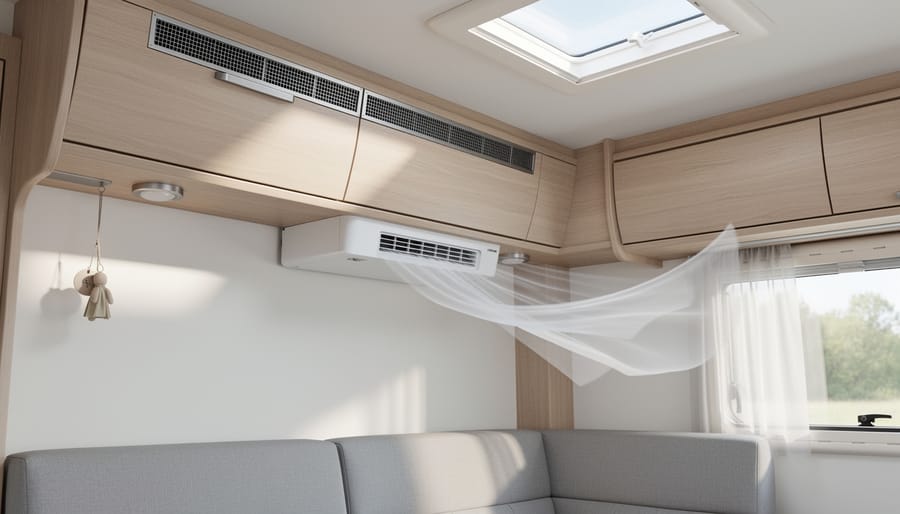
If you’ve ever tried to heat a van and ventilate it at the same time, you’ve felt the tug-of-war. Heating and cooling change the temperature of your air. Ventilation changes the quality of it. They sound like the same job, but they aren’t, and that’s where most of the confusion comes from.
Think of it this way: your diesel heater or furnace is the engine of your comfort, and an HRV is the lungs. An HRV won’t warm a cold cabin or chill a hot one. What it does is bring in fresh air while keeping most of the heat you’ve already paid for, so your heater or AC doesn’t have to fight a constant stream of cold or hot outside air.
That partnership matters more than it used to. As more of us build tighter, better-insulated rigs and stay out through colder and hotter months, trapped moisture and stale air have become a regular topic in van and RV groups. A well-sealed home on wheels is great for efficiency, but it needs a way to breathe.
Here’s how the common options stack up. Power draw is only a rough, general guide, so always check each unit’s specs.
| Option | Primary job | Fresh air | Moisture | Power draw (general) | Best for |
|---|---|---|---|---|---|
| HRV | Ventilate while keeping heat | Yes | Helps clear it | Low to moderate | Sealed, insulated rigs |
| Roof vent fan | Move air out quickly | Partly | Helps, but loses heat | Low | Cooking and shower bursts |
| Cracking a window | Passive airflow | Yes | Some | None | Mild weather |
| Diesel heater | Heat the space | No | No | Low to moderate | Cold-weather warmth |
| RV air conditioner | Cool the space | No | Somewhat | High | Hot, shore-powered stays |
Notice that no single item does everything. The best setups pair a heating or cooling source with some form of controlled ventilation, and an HRV is simply the most efficient way to do the second half.
Is an HRV a Good Fit for Your Rig?
Signs You’d Benefit Most
Wondering if an HRV is worth it for your rig? A few telltale signs usually point the way.
The big one is persistent window condensation. If you’re wiping down glass every morning and the ceiling drips by sunrise, moisture has nowhere to go. Musty smells are close behind, especially in storage bays, behind cushions, or around the bed.
Cold-weather camping makes everything worse, because you’re tempted to keep every vent sealed tight. Add pets or kids, who breathe, shed, and generate more humidity than you’d guess, and the air turns stale fast. Cooking indoors and sleeping with the vents shut pile on moisture and CO2 overnight.
I learned this the hard way on a late-fall trip. We’d buttoned everything up against a freezing night, made a big pot of chili, and gone to bed with the dog curled at our feet. By morning, the windows were streaming, the whole van smelled like last night’s dinner, and we both woke up with that groggy, heavy-headed feeling. Cracking a window would have dumped all our hard-earned heat, and that’s exactly the trade-off an HRV is built to solve.
If that sounds familiar, you’re far from alone. Plenty of folks who commit to full-time travel hit this wall sooner or later, and it’s usually a sign your air needs a better plan.
Space, Power, and Budget Realities
Before you fall in love with an HRV, take a hard look at your floor plan. The unit itself is usually a box roughly the size of a small toolbox, but the ducting is what trips people up. You need a spot for the unit, a clear path for two duct runs, and exterior openings that don’t collide with your roof rack, solar panels, or wall framing. In a small van, that can mean creative placement, like tucking it behind a cabinet or above the wet bath. Sometimes it just won’t fit, and that’s okay.
Power is the next piece. Most units sip electricity compared with your fridge or a heater, but it runs for hours, so it adds up on a battery bank. Check the manufacturer’s specs for draw and plan your solar and storage around it.
Cost is where it lands in the middle of most van life upgrades: pricier than a roof fan, cheaper than a full climate overhaul.
Pros
- Fresher air with less stuffiness and fewer cooking odors.
- Noticeably less window and ceiling condensation.
- Less heat lost compared with cracking a window.
- More even comfort while you sleep with vents closed.
Cons
- Higher upfront cost than simple fans or vents.
- Needs real space for the unit and ducting.
- Installation takes planning and careful sealing.
- Adds a steady draw on your battery bank.
If space or budget is tight, a good roof fan and a cracked window may serve you better. No shame in simple.
What to Look for When Choosing an HRV System
Sizing It to Your Space
The easiest way to size an HRV is to think about how often you want the air in your rig to be swapped out. Start with your interior volume. Picture the whole living space, floor to ceiling, and ignore the basement storage and the cab you rarely use. A compact van holds a lot less air than a 35-foot motorhome, so it needs a lot less airflow to feel fresh.
Next, count the people and pets who actually live there. Every one of us breathes out moisture and CO2 all day and all night, and a couple sleeping with the vents shut will fog up a small space much faster than one person on a weekend trip. Add cooking, showering, or drying wet gear indoors, and the demand climbs even higher.
A simple way to frame it is to ask how many times per hour the unit can refresh your space. Smaller rigs with more people usually want more air changes, while roomy rigs with just one or two travelers can get by with fewer.
You don’t need to do heavy math here. Most manufacturers publish sizing guidance based on volume and occupancy, so check their charts, and if you land between two models, going slightly larger gives you room to run the fan on a gentler setting.
Built for the Road vs. Built for a House
Most home HRV units are designed to sit still in an attic or basement, plugged into reliable grid power, with plenty of room for bulky ducting. A van or RV throws all of that out the window. Your rig shakes down washboard roads, flexes over bumps, and swings through big temperature changes, which can loosen fittings and stress components that were never meant to move.
Space is the next hurdle. Residential units can be surprisingly big, and a duct run that’s easy in a house gets awkward when every cubic inch is spoken for. Power matters too. If you’re running on a battery bank and solar, a unit with a hungry fan can quietly drain your reserves overnight.
That doesn’t mean a house unit is automatically off the table, but it’s worth asking a few questions before you buy:
– Is this unit rated or recommended for mobile or marine use?
– How does it handle constant vibration, and does it need special mounting?
– What’s the electrical draw, and does it run on 12V or only on 120V AC?
– Can it operate in freezing temperatures without a defrost issue?
– What are the exact dimensions, and what duct sizes does it need?
A manufacturer who answers these clearly is usually one who understands life on wheels.
Installing an HRV: DIY or Call a Pro?
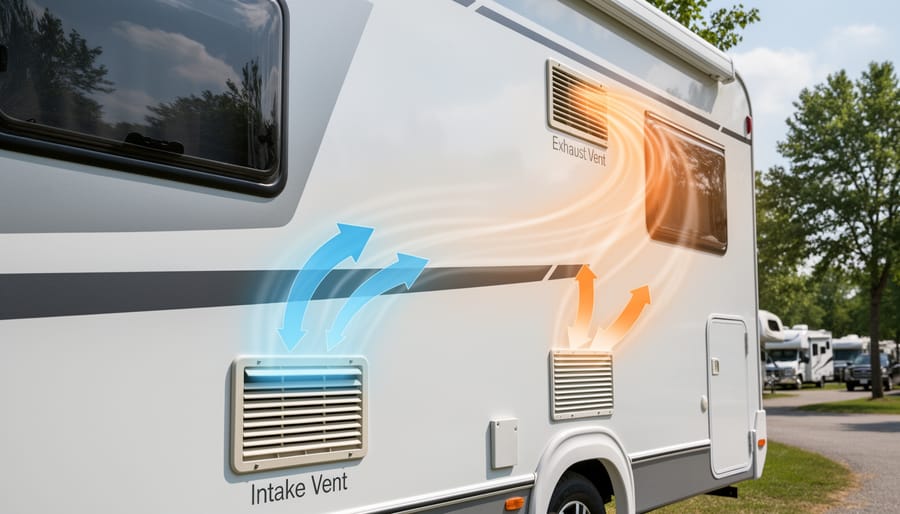
The Basic Steps at a Glance
Before you pick up a drill, it helps to see the whole job laid out. Every rig is different, so treat this as a map rather than a manual, and always follow your unit’s instructions over any general guide.
- Plan your placement. Decide where the unit, the two exterior vents, and the interior grilles will go, and sketch the duct path so you know how long the runs will be.
- Cut and seal the exterior openings. Mark carefully, cut only what you need, then seal the edges so water and dust stay out.
- Run the ducts. Connect the unit to your intake and exhaust points with as few bends as possible, and secure everything so it won’t rattle on rough roads.
- Wire the power. Connect the unit to a properly fused 12V or shore-power source, using wire sized to the manufacturer’s specs.
- Add the filters. Fit the supplied filters before the first run so the core stays clean from day one.
- Test the airflow. Switch it on, check that air moves in and out at each vent, and listen for odd noises or vibration.
Some of these steps come easier to some people than others. Cutting into your walls can feel nerve-racking the first time, and that’s completely normal. Plenty of folks are happy to DIY the ducting and wiring but hand off the exterior cuts, or the other way around. Doing the parts you’re confident in and asking for help with the rest is a perfectly good way to get the job done.
Expert Tips to Avoid Common Mistakes
Here’s where a little planning pays off big. First, keep your intake and exhaust ports well apart. If they sit too close, your HRV just recycles the stale air it’s trying to get rid of. Aim for opposite sides of the rig whenever you can.
Second, insulate your ducts, especially any runs through cold spaces. Uninsulated ducting sweats when warm, moist air meets chilly surfaces, and that dripping can soak into your walls before you notice.
Third, take your time sealing every penetration. A tiny gap around an exterior vent becomes a draft, a leak, or a path for water. Use proper sealant and check it again after your first rainy trip.
Finally, place the intake far from anything that burns fuel. Engines, diesel heaters, and generators all put out exhaust you never want pulled inside.
I learned that last one the hard way. On an early build, I tucked the intake near my heater’s exhaust because it was the easiest spot. The first cold morning, the cabin smelled faintly of fuel, and I spent an afternoon relocating the whole thing. A few extra minutes of planning would have saved me that headache.
Keeping Your HRV Running Smoothly
Good news: an HRV is one of the more forgiving systems in your rig, and a little routine attention goes a long way. Think of it like checking your tire pressure before a trip rather than rebuilding an engine.
Start with the filters, since they do the heavy lifting. Pull them every month or two during heavy use and rinse or replace them according to the manufacturer’s guidance. A clogged filter makes the fans work harder and cuts your airflow, which is usually the first sign something needs love.
Next, give the core a quick look a couple of times a year. If it’s dusty or grimy, clean it gently the way your manual recommends, and never force or bend it.
Don’t forget the outside. Intake and exhaust vents collect dust, leaves, bugs, and in winter, snow or ice. A quick wipe or brush-off keeps air moving freely. I make it part of my walk-around before we roll out, and it’s worked into the same rhythm as the other RV camping tips I follow for each trip.
Camping somewhere dusty, smoky, or pollen-heavy? Check filters more often, and on really smoky days consider pausing fresh-air intake until conditions clear. Seasonal check-ins, spring and fall, keep everything happy.
Common Questions About HRV Systems in RVs and Vans

Here are the questions I hear most from folks weighing this upgrade, answered the way I’d tell a friend at a campground fire.
Can I run an HRV off solar and batteries?
Many units are low-draw and designed to run on 12-volt power, so a solar-and-battery setup can often handle one. Check the manufacturer’s listed wattage and compare it to your daily power budget before you buy.
Will it stop all condensation?
It won’t erase it entirely, but steady fresh-air exchange helps carry moisture out before it settles on cold windows and walls. Cooking, showering, and drying wet gear indoors can still add moisture, so ventilate during those moments too.
Is it noisy at night?
Most run at a gentle hum on low speed, and many people find it fades into the background like a small fan. Ask about decibel ratings and low-speed settings if you’re a light sleeper.
Do I still need a roof vent fan?
Often, yes. A vent fan is handy for quick bursts of airflow, like clearing smoke after a burnt dinner, while an HRV handles the slow, steady background exchange.
Does it work in very cold or very hot weather?
It can help in both, since it’s designed to temper incoming air using the air leaving. Performance and cold-weather limits vary by model, so check the specs for your climate.
Can I install one in a small camper van?
It’s possible, but space is the big challenge, so you’ll want to map out where the unit and ducting could realistically live. Some van builders find a simpler ventilation setup fits better, and that’s a perfectly good choice.
None of these answers is one-size-fits-all, because every rig and every trip is a little different. If you’re still sorting out what your setup needs, it never hurts to pair this upgrade with a regular look at the basics. Our RV maintenance checklist is a friendly place to start, and keeping filters and vents on that list means your fresh-air system keeps doing its quiet, comfortable work all season long.
At the end of the day, better airflow isn’t just a technical upgrade. It’s a comfort and health upgrade, the kind that shows up in clearer windows, fresher mornings, and a space that simply feels better to live in.
If you’re curious, start small. Spend a few days paying attention to your own rig: where moisture builds up, how the air smells after cooking, how you sleep with the vents shut. That tells you more than any spec sheet will.
Every rig and every journey is different, so trust what fits your setup. And we’d love to hear from you. Share your ventilation wins, lessons, and setups with the Life on Wheels community.