
Choose a vehicle that can handle corrugated outback roads and carry sufficient water and fuel for 500+ kilometer stretches between services—a 4WD with high clearance, long-range tanks, and dual batteries will keep you safe in remote territories where breakdowns mean serious trouble. Stock your rig with recovery gear including a quality snatch strap, shovel, and MaxTrax before heading inland, because getting bogged in red sand or stuck on a creek crossing is when you’ll appreciate having the right equipment and knowing how to use it.
Map your route around seasonal conditions, avoiding the Top End during monsoon season (November to April) and planning desert crossings for cooler months when midday temperatures won’t turn your van into a furnace. Download offline maps for your entire journey and share your itinerary with someone back home, because mobile coverage vanishes completely once you leave the coastal highway, and emergency services need to know where to look if you activate your EPIRB or satellite communicator.
Build your water capacity to at least 150 liters for two people, factor in fuel consumption that doubles on sandy or rough tracks, and understand that Australia’s vastness means you can’t just wing it—running out of essentials hundreds of kilometers from help is a genuine risk that catches underprepared travelers every year. If you’re new to extended remote travel, check out beginner tips that cover essential systems and safety protocols before committing to challenging outback routes.
Connect with the overlanding community through apps like WikiCamps and iOverlander to find reliable water sources, free camping spots, and real-time road condition updates from travelers who’ve just come through the areas you’re heading toward—this shared knowledge transforms intimidating empty spaces into navigable adventures where you’re never truly alone.
Why Australia is Perfect (and Challenging) for Van Life
The Scale of the Australian Outback
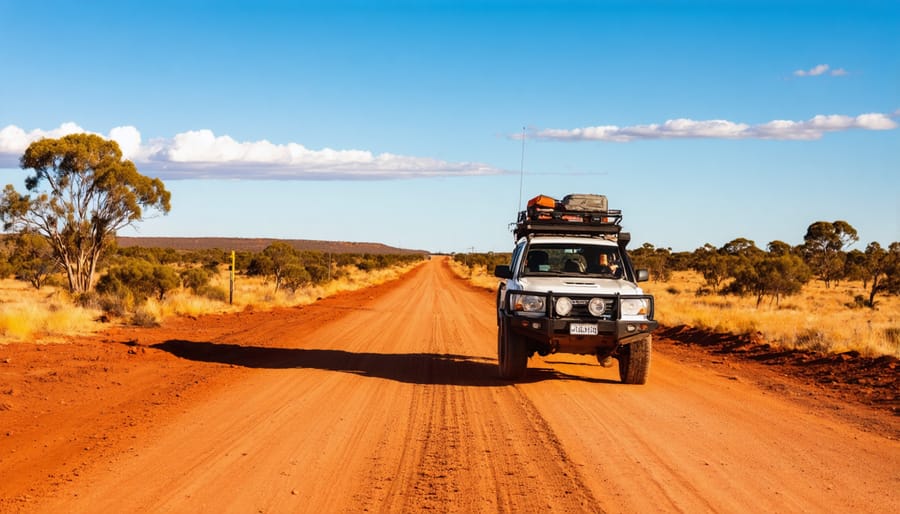
Here’s something that took me completely by surprise on my first Australian overlanding trip: what Australians call “remote” is unlike anywhere else I’d travelled. When locals say a town is “a bit out there,” they might mean it’s 500 kilometres from the nearest city. That coffee stop you’re planning? It could be 200 kilometres away, and the next one after that might be another 300.
To put this in perspective, you can drive for eight hours straight on some outback highways and see maybe three other vehicles. The distance between fuel stops can exceed 400 kilometres in places like the Nullarbor Plain or Central Australia. One experienced overlander told me she always calculates distances in driving days rather than kilometres, because the numbers alone don’t capture the reality of Australian remoteness.
This isn’t meant to intimidate you, just to help you prepare properly. Understanding these distances means planning fuel stops meticulously, carrying extra water and food supplies, and accepting that help won’t arrive quickly if something goes wrong. It also means experiencing solitude and landscapes on a scale that feels almost otherworldly. Once you embrace the vastness rather than fight it, the outback becomes less daunting and more magical.
Climate Zones You’ll Encounter
Australia’s climate diversity is one of the most exciting aspects of overlanding here—and honestly, it’s something that caught me completely off guard during my first trip up the coast. You’ll essentially experience three distinct worlds as you travel.
The tropical north, spanning Queensland’s coastal regions and the Top End, brings intense heat and dramatic wet seasons from November to April. During the wet, some roads become impassable and many national parks close entirely. But if you time it right during the dry season, you’ll find stunning waterfalls, perfect swimming holes, and comfortable overnight temperatures. Your van will need excellent ventilation and ideally air conditioning or at least powerful fans—trust me on this one.
The desert center is raw, unforgiving, and absolutely magnificent. Temperatures swing wildly between scorching days and surprisingly cold nights, sometimes dropping near freezing in winter months. Water management becomes critical here, and you’ll want extra fuel capacity since service stations can be 500 kilometers apart. The vastness changes something in you though—there’s nothing quite like watching sunset paint the red earth in impossible colors.
The temperate south offers the most forgiving conditions for van life, with mild winters and warm summers. This region provides easier access to amenities and established campgrounds, making it perfect for shaking down your setup before venturing into more remote areas. Many overlanders start here to build confidence, which is exactly what I’d recommend if you’re new to the lifestyle.
Choosing Your Van for Australian Conditions
4WD vs 2WD: What You Really Need
Let’s cut through the hype: you don’t automatically need a 4WD to explore Australia, but your itinerary will make or break this decision.
Here’s the reality from someone who’s done both. If you’re sticking to sealed highways, coastal routes, and established campgrounds along the east coast or Great Ocean Road, a well-maintained 2WD van will serve you brilliantly. Most of Australia’s iconic destinations—Byron Bay, the Great Barrier Reef access points, even much of the Red Centre—are accessible on bitumen. You’ll save thousands on the vehicle purchase, spend less on fuel, and have more money for experiences.
However, 4WD becomes non-negotiable for Cape York, the Gibb River Road, Simpson Desert crossings, and countless remote beaches and national parks that define true overlanding. Even some “main” routes like sections of the Tanami Track require proper four-wheel drive capability. I’ve met travelers who regretted buying 4WD when they never left the highway, and others who felt limited by their 2WD when they discovered Australia’s wild heart.
My advice? Map your dream destinations first. If more than 30 percent require off-road capability, invest in 4WD. If you’re testing van life or prefer coastal touring, start with 2WD and rent a 4WD for specific adventures. There’s no shame in knowing your limits—smart planning beats expensive vehicles every time. The van life community includes both, and you’ll find your tribe regardless of drivetrain.
Ground Clearance and Unsealed Roads
Here’s the reality many first-time overlanders discover the hard way: that rental sedan might handle city streets beautifully, but Australia’s unsealed roads are a completely different beast. Ground clearance becomes your best friend out here, and trust me, you’ll understand why after your first encounter with corrugations that rattle every bolt in your van.
For Australian overlanding, aim for at least 200mm of clearance, though 250mm or more is ideal if you’re venturing into remote areas. Corrugated roads create a washboard effect that not only shakes your vehicle mercilessly but can bottom out lower vehicles, potentially damaging your fuel tank, exhaust system, or undercarriage. I’ve seen too many travelers stranded after misjudging this.
Protecting your vehicle means driving at the right speed for the conditions—sometimes faster actually smooths the ride over corrugations, but you need the clearance to safely experiment. Consider installing bash plates or skid plates to shield vulnerable components underneath. Check your tire pressure too; slightly deflating on dirt roads improves traction and reduces the bone-jarring impact.
Remember, this isn’t about having the fanciest 4WD—it’s about respecting the terrain and preparing accordingly. Your vehicle is your home out here, so treat it with the care it deserves.
Fuel Range Requirements
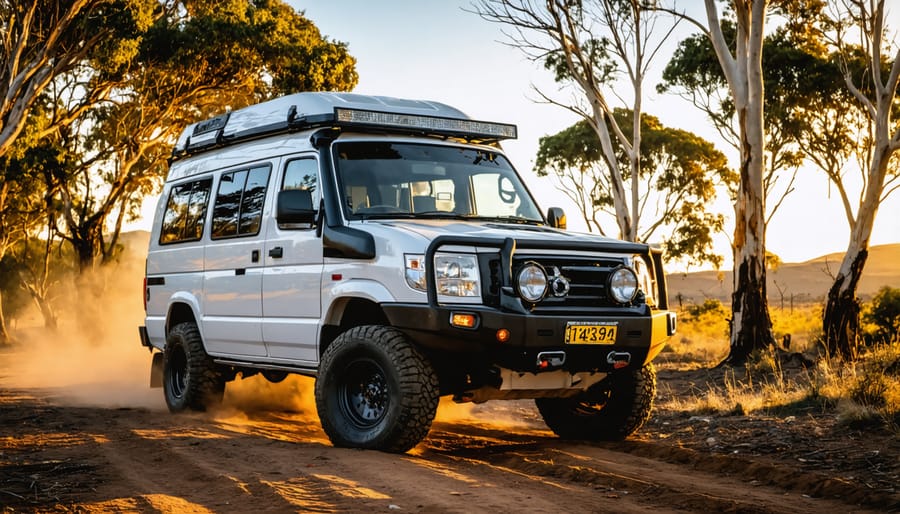
One of the most crucial lessons I learned during my first Outback crossing was when I pulled into a remote roadhouse only to discover their fuel pump was dry—and the next station was 380km away. Since then, I’ve become pretty obsessive about fuel calculations, and trust me, it’s worth the effort.
Start by honestly assessing your van’s fuel consumption. Take it for a loaded test drive and calculate your actual litres per 100km, including the weight of water, gear, and passengers. Most vans average between 12-18L/100km on highways, but add 20-30 percent for corrugated roads, sand driving, and constant gear changes on rough terrain.
Here’s the golden rule: never rely on making it with less than a quarter tank remaining. Map your route and identify every fuel stop, checking current availability through apps like WikiCamps or by calling ahead. For areas where stations are 300km apart or more, you’ll likely need auxiliary fuel capacity.
Many overlanders install long-range tanks (typically 100-150L total capacity) or carry jerry cans secured properly on roof racks or rear bumpers. Just remember that carrying extra fuel adds significant weight—factor this into your payload calculations. The peace of mind knowing you can comfortably reach the next station makes these investments absolutely worthwhile for serious Australian overlanding adventures.
Essential Van Setup for Australian Overlanding
Water Storage and Management
When you’re heading into Australia’s vast outback, water isn’t just important—it’s absolutely essential. We learned this firsthand during our first Nullarbor crossing when we seriously underestimated our needs!
For most overlanding adventures, plan on 100-150 liters of storage capacity. This gives you about a week’s worth of water for two people with conservative use. In remote areas, always carry extra jerry cans as backup—we keep two 20-liter containers that have saved us more than once.
Tank options vary from permanently installed under-floor tanks to flexible bladder systems. Whatever you choose, make sure you’re keeping up with water system maintenance to prevent contamination in the heat.
Conservation becomes second nature out here. Navy showers (wet, soap, rinse—done in under two minutes) are your friend. We use a spray bottle for washing dishes and hands, saving gallons daily. Collect greywater in a bucket for initial dish rinses or cleaning boots.
Pro tip from experienced overlanders: know your water sources before you go. Download apps like WikiCamps Australia that mark reliable water points, and always ask locals about bore water quality. Some outback bores are too saline for anything except radiator top-ups, so verification saves disappointment and precious supplies.
Power Systems for Off-Grid Living
Powering your van off-grid across Australia’s vast landscapes requires serious planning, especially when you’re days from the nearest town. From my own experience crossing the Nullarbor, I learned quickly that relying on inadequate power can turn an adventure into a stressful scramble.
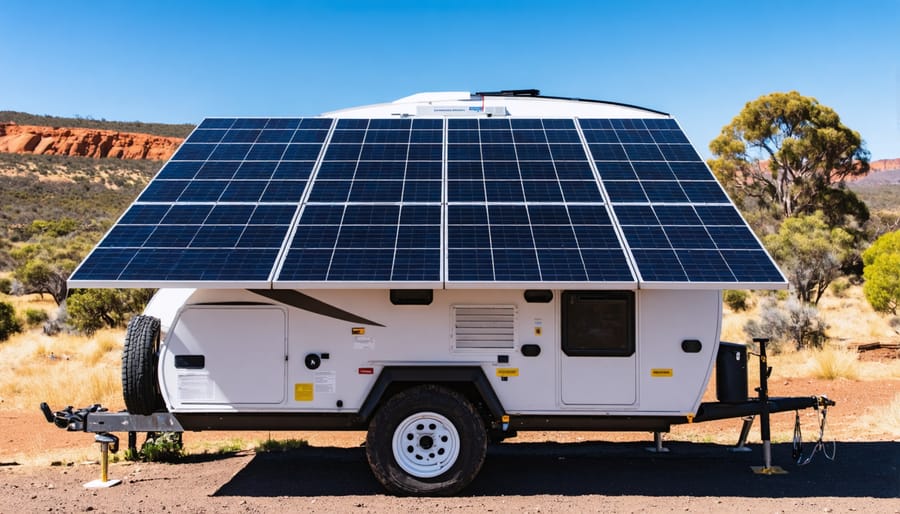
For Australian conditions, aim for a minimum of 400 watts of solar panels—though 600 watts is ideal if you’re running a fridge, charging devices, and using fans during those scorching days. The intense Aussie sun is your friend here, generating incredible power even in winter. Pair this with at least 200Ah of lithium battery capacity. Lithium batteries handle heat better than AGN options and provide consistent power output, which matters when temperatures soar above 40 degrees Celsius.
Managing power in extreme heat is crucial. Position your battery system in the coolest part of your van, away from direct sunlight and heat sources. I’ve seen travelers lose battery capacity simply because they mounted them near exhaust pipes or in poorly ventilated compartments. Install a battery monitor so you can track consumption in real time—this becomes essential when wildcamping for extended periods.
Consider expanding your solar system before hitting remote tracks like the Gibb River Road or Cape York, where shade is scarce but sun is abundant. Many experienced overlanders recommend mounting panels flat rather than tilting them—it reduces wind resistance on corrugated roads and still captures plenty of that overhead Australian sun.
Cooling and Ventilation
Australian summers can be brutal, but with smart ventilation strategies, you’ll stay surprisingly comfortable even when temperatures soar past 40°C. The key is creating airflow that works with nature, not against it.
Start with proper insulation—it’s not just for winter. We learned this the hard way during our first Northern Territory crossing when our poorly insulated van became an oven by 10 AM. Quality insulation in your roof and walls keeps heat out during the day and warmth in during cool desert nights.
Fan placement makes all the difference. Install at least one roof-mounted exhaust fan to draw hot air out from the highest point, and add a second intake fan if possible to create cross-ventilation. Position your intake fan on the shaded side when parked, and always crack windows on opposite ends to maximize airflow. Window mesh screens are essential—they let you sleep with windows open without inviting Australia’s infamous bugs inside.
Park strategically under shade during peak heat, and consider reflective window covers for your windscreen. Many experienced overlanders swear by portable 12V fans positioned near sleeping areas for those sweltering nights when even natural breeze isn’t enough.
Communication and Safety Equipment
In Australia’s remote outback, communication equipment isn’t just a nice-to-have—it’s genuinely lifesaving gear. I learned this firsthand when our van broke down 180 kilometers from the nearest town, with no mobile signal for days in either direction.
Start with a quality UHF radio for communicating with other travelers and emergency services on commonly monitored channels like 40 (the unofficial help channel). These work brilliantly in convoy situations and can reach surprising distances in flat terrain.
For true emergencies, an EPIRB (Emergency Position Indicating Radio Beacon) is non-negotiable. When activated, it alerts rescue services to your exact location via satellite. Satellite phones or communication devices like Garmin inReach provide two-way messaging and GPS tracking, letting family know you’re safe when you’re weeks into the Outback.
Many seasoned overlanders carry all three systems—redundancy matters when help is genuinely far away. Yes, it’s an investment, but out here, being unreachable isn’t romantic or adventurous. It’s dangerous. The Australian bush is unforgiving, and these tools ensure you’re never truly alone when things go sideways.
Planning Your Australian Overland Route
Seasonal Considerations
Timing your Australian adventure right can make the difference between a dream trip and a challenging ordeal. The continent’s vast size means you’ll encounter dramatically different weather patterns depending on where and when you travel.
Up north in tropical regions like the Top End and Queensland’s Cape York, the wet season from November to April brings torrential rain, flooding, and road closures that can strand you for weeks. I learned this the hard way when a creek crossing became impassable overnight, adding three days to what should’ve been a morning drive. Many popular tracks close entirely during this period, so plan your northern adventures for the dry season, roughly May through October, when you’ll enjoy stunning weather and accessible roads.
The southern states flip this pattern. Summer down south means scorching temperatures and serious fire danger, particularly from December through February. Fire bans can restrict where you camp and whether you can use gas appliances, while extreme heat makes desert crossings genuinely dangerous. Experienced overlanders often tackle the Red Centre and outback routes during cooler months between April and September.
Western Australia’s shoulder seasons, around March to May and September to November, offer sweet spots with mild weather and fewer crowds. These months also work beautifully for coastal routes along the east.
Keep the Bureau of Meteorology app handy and connect with other van lifers who’ve recently traveled your intended route. They’ll share real-time conditions that official sources sometimes miss, helping you stay safe while maximizing your Australian overlanding experience.
Iconic Overland Routes
Australia’s iconic overland routes are the stuff of van life legend, and trust me, they live up to the hype. These tracks will test your vehicle, challenge your planning skills, and reward you with some of the most jaw-dropping scenery you’ll ever encounter.
The Gibb River Road in Western Australia’s Kimberley region is perhaps the most famous. This 660-kilometer red dirt adventure connects Derby to Kununurra and passes through ancient gorges, pristine swimming holes, and Aboriginal rock art sites. You’ll need a proper 4WD setup and a good few days to tackle it properly. A fellow overlander once told me the Gibb taught her more about her van’s capabilities in one week than a year of weekend trips ever could.
Down south, the Oodnadatta Track cuts through South Australia’s outback, following the old Ghan railway route. This 617-kilometer journey between Marree and Marla showcases the raw beauty of the Australian interior, including the famous pink waters of Lake Eyre when it’s full. The track demands respect with its corrugated surfaces and remote nature, but the sunsets over the desert flats are absolutely unforgettable.
For coastal cruising, you can’t beat the Great Ocean Road in Victoria or the longer journey up the east coast from Melbourne to Cairns. These sealed highways offer easier driving while still delivering that freedom-on-wheels feeling, making them perfect if you’re just starting your overlanding journey or traveling with family.
Building in Flexibility
Here’s the thing about overlanding Australia – the land itself has other plans for your carefully crafted itinerary. I learned this the hard way when a washed-out road added three days to what should’ve been a two-day coastal drive. Now? I build in what I call “flex days” for every week of travel.
Australia’s distances are deceptive, and conditions change rapidly. That perfect beach camp you researched might be closed for turtle nesting season, or those red dirt roads could be impassable after unexpected rain. Rather than fighting this reality, embrace it as part of the adventure.
Start by planning your route with only 60-70% of your time committed to specific destinations. Leave the rest open for detours, weather delays, or those “we need to stay here longer” moments that make van life magical. Keep a backup list of alternate spots and always have your fuel range mapped with multiple refueling options.
Check local road condition websites daily and connect with other travelers heading in the opposite direction – their real-time intel is gold. Most importantly, give yourself permission to change course completely. Some of our best memories came from places we never intended to visit.
Where to Camp: Free Camps, National Parks, and Everything Between
Free Camping Etiquette and Regulations
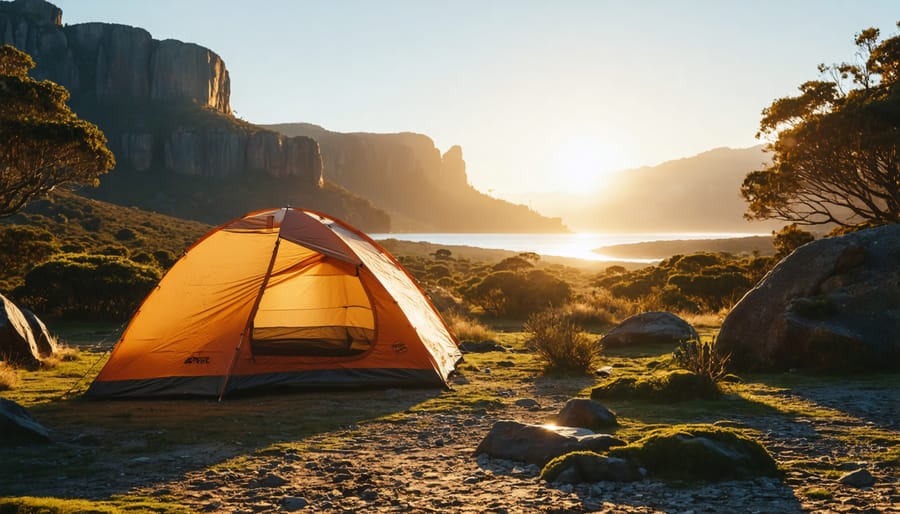
Navigating free camping across Australia requires understanding that each state and territory has its own rules—and they can vary significantly. In Queensland and Northern Territory, you’ll find more relaxed attitudes toward free camping, with numerous rest areas and public lands welcoming overnighters. Victoria and New South Wales tend to be stricter, particularly in coastal areas, while Western Australia and Tasmania fall somewhere in between. Always check local council websites and signage, as regulations change frequently based on seasonal conditions and community feedback.
Following Leave No Trace principles isn’t just about following rules—it’s about preserving these incredible spots for fellow travelers and future generations. Pack out everything you bring in, including gray water from washing up. Use established campsites when possible to minimize environmental impact, and keep fires contained to designated areas or portable fire pits. I’ve seen too many beautiful free camps closed because of irresponsible behavior, and it affects our entire community.
Respecting local communities is equally crucial. Remember, you’re often parking in someone’s backyard, figuratively speaking. Support local businesses by buying supplies in town, limit your stay to one or two nights in residential areas, and keep noise levels down, especially during early mornings and evenings. Understanding proper camping etiquette helps maintain positive relationships between van lifers and locals, ensuring these freedoms remain available for everyone who follows.
Best Apps and Resources
Having the right apps on your phone can truly be a game-changer when you’re overlanding across Australia’s vast landscapes. Let me share the tools that became our daily companions on the road.
WikiCamps Australia is hands-down the most popular app among van lifers here, and for good reason. It’s like having thousands of fellow travelers in your pocket, sharing their favorite spots. You’ll find everything from free camps to caravan parks, complete with photos, amenities, and recent reviews. We’ve discovered some absolute gems through this app that we’d never have found otherwise.
CamperMate is another fantastic option, offering similar features with a slightly different interface. Many travelers keep both apps handy since campsite databases occasionally differ.
Don’t overlook Google Maps offline functionality. Download regions before heading into remote areas where phone reception disappears. We learned this the hard way in the Kimberley!
Emergency Plus is essential for safety, providing your exact GPS coordinates to emergency services. Fuel Map Australia helps you plan refueling stops, critical when stations can be 300 kilometers apart. For weather tracking, download BOM Weather for reliable Australian forecasts.
These digital tools, combined with good old-fashioned paper maps as backup, will keep you informed and confident throughout your Australian adventure.
National Park Camping Permits
Navigating Australia’s national park camping systems can feel like a puzzle at first, but once you crack the code, you’ll unlock some of the most stunning campsites on the continent. Each state manages permits differently, so here’s what you need to know. In New South Wales and Queensland, book through their respective parks websites well in advance, especially for iconic spots like Cape Byron or Fraser Island during peak season. Victoria uses Parks Victoria, while Western Australia’s parks are managed through their own booking portal. South Australia and Tasmania have separate systems too, so bookmark all these sites before you hit the road.
Pro tip from seasoned overlanders: popular coastal sites fill up months ahead during winter when everyone escapes south. Set calendar reminders for when bookings open, typically 3-6 months out depending on the state. Some parks offer first-come-first-served sites, perfect for spontaneous route changes. Always carry your permit confirmation, whether digital or printed, as rangers do check regularly. The community wisdom here is simple: flexibility is your friend. Have backup options ready, and don’t be discouraged if your dream site is full. We’ve found some of our favorite hidden gems while searching for alternatives to booked-out campgrounds.
Budgeting for Extended Australian Travel
Daily Cost Expectations
Let’s talk real numbers, because budgeting for Australian overlanding can feel like trying to hit a moving target. From my experience crisscrossing the country, daily costs vary wildly depending on your travel style and where you’re exploring.
For budget-conscious travelers, expect to spend between 50-80 AUD per day per person. This includes camping in free sites or national parks (0-15 AUD), cooking most meals yourself (20-30 AUD for groceries), minimal fuel on slower days (20-40 AUD), and occasional treats like a cafe coffee. One couple I met in the Kimberley lived beautifully on 60 AUD daily by wildcamping, fishing for dinner, and rationing their wine supplies.
Mid-range overlanders typically spend 100-150 AUD per day. This bracket allows for powered caravan park sites a few nights weekly (25-45 AUD), dining out occasionally (30-50 AUD), regular fuel consumption during active travel (40-80 AUD), paid attractions and tours (20-40 AUD), and better phone data plans.
Comfortable travelers might budget 180-250 AUD daily, incorporating nicer accommodation options, frequent restaurant meals, guided experiences, and less concern about fuel efficiency.
Here’s the insider tip: fuel becomes your biggest variable expense. Crossing the Nullarbor or exploring the Outback can double your usual fuel budget. Always factor in an emergency fund of at least 1,000 AUD for unexpected vehicle repairs—trust me, you’ll sleep better knowing it’s there. Remember, the beauty of van life is flexibility; adjust your spending based on what matters most to your adventure.
Fuel Costs Across the Country
Here’s something we learned the hard way on our first lap around Australia: fuel prices can swing wildly depending on where you are. In major cities like Melbourne or Brisbane, you might pay around $1.80-$2.00 per litre, but venture into remote areas and that can jump to $2.50 or even $3.00 per litre. We once paid $3.40 in a tiny outback town, and honestly, we were just grateful there was fuel at all.
Why the dramatic difference? Remote service stations face massive freight costs to truck fuel across vast distances, often hundreds of kilometres from the nearest depot. They also have lower sales volumes and higher operational costs. Places with little competition can essentially charge what they need to stay viable. It’s not gouging, it’s just the reality of servicing remote Australia.
To plan effectively, budget conservatively at the higher end when calculating fuel costs for remote sections. Apps like FuelMap and Wikicamps show current prices and station locations, which are absolute lifesavers. Always fill up before heading into remote areas, and consider carrying extra fuel in jerry cans for those long stretches between towns. Some experienced overlanders recommend calculating your fuel consumption rate during the first few weeks, then mapping your route with realistic range expectations. This approach has saved us from anxious moments more than once, and there’s real peace of mind knowing you’ve got the buffer to reach the next pump comfortably.
Staying Safe on Remote Australian Roads
Wildlife and Driving Times
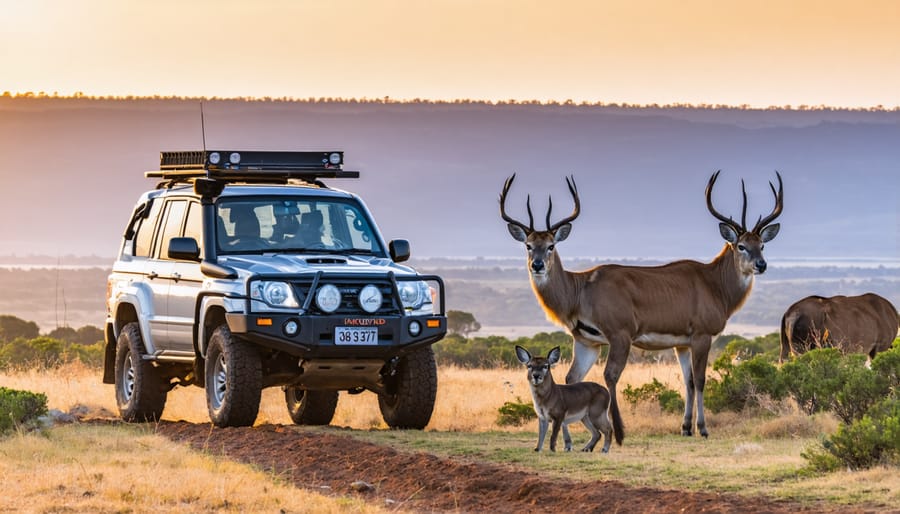
Here’s something we learned the hard way during our first outback crossing: Australian wildlife operates on a schedule that directly conflicts with golden hour photography dreams. Dawn and dusk might offer stunning light, but they’re also peak feeding times for kangaroos, wallabies, wombats, and emus—all of which can total your van in a collision.
We now follow a strict rule: wheels stopped 30 minutes before sunset, not rolling again until 30 minutes after sunrise. Kangaroos are unpredictable, often traveling in groups, and one crossing the road usually means several more are following. They’re also attracted to headlights and can leap directly toward your vehicle rather than away from it.
If you must drive during these times, reduce your speed significantly—we’re talking 60 km/h maximum on open roads. Scan the roadside constantly, use high beams when possible, and remember that livestock also wander freely in many areas. One experienced overlander told us she never drives faster than she can comfortably brake within her headlight range at night.
Installing bull bars and driving lights helps, but nothing beats defensive timing. Your van is your home—protecting it means respecting Australia’s wildlife patterns.
Road Train Etiquette
Encountering road trains on Australia’s remote highways is one of those quintessentially Aussie experiences that deserves respect and awareness. These massive trucks, often pulling three or four trailers stretching up to 53 meters, are the lifeblood of the Outback, and sharing single-lane highways with them requires some know-how.
When you spot a road train approaching from behind, here’s your move: indicate left early and pull over onto the shoulder when it’s safe, giving them plenty of room to pass. They need wide clearance and can’t slow down easily. Trust me, after my first close encounter on the Stuart Highway, I learned that cooperation makes everyone’s journey safer.
If you’re overtaking, make absolutely certain you have at least a kilometer of clear road ahead—these behemoths are much longer than they appear, and overtaking can take 2-3 kilometers at highway speeds. Never attempt it on curves, crests, or in marginal conditions.
A friendly wave or headlight flash when they pass shows you’re part of the road-sharing community. Most truckies will flash their hazards in thanks, which always brings a smile. Remember, they’re professionals navigating challenging routes, and a little courtesy goes a long way in making Australia’s remote roads work for everyone.
What to Do When Things Go Wrong
Let’s be real—something will eventually go sideways on your Australian overlanding adventure, and that’s completely normal. The key is being prepared so a hiccup doesn’t derail your entire journey.
First up, breakdowns happen, especially on corrugated outback roads. Before you head into remote areas, make sure someone knows your planned route and expected arrival times. I learned this the hard way when our alternator died 200 kilometers from the nearest town—having told friends our whereabouts meant they could check in when we didn’t surface. Australia’s emergency number is 000, but out in remote regions, your mobile phone might be as useful as a chocolate teapot. Consider investing in an EPIRB (Emergency Position Indicating Radio Beacon) or satellite communicator like a Garmin inReach for true emergencies.
Recovery equipment isn’t optional for serious overlanding—it’s your insurance policy. At minimum, carry a decent shovel, recovery boards (MaxTrax are gold standard), snatch straps, and a proper rated shackle. A 12-volt air compressor is essential for deflating tires on sand and reinflating afterward. Many experienced overlanders also pack a hi-lift jack and tree trunk protector.
Keep your essential checklists updated with emergency contacts, including your insurance breakdown service, local mechanics along your route, and tourist information centers who can coordinate assistance.
Join communities like ExplorOz or WikiCamps forums before you leave—the van life crew is incredibly supportive, and someone’s usually traveled your route recently with current intel on road conditions and services.
Connecting with the Van Life Community
One of the most rewarding aspects of van life in Australia is the incredible community you’ll discover along the way. Whether you’re parked at a remote beach camp or refueling in a small outback town, chances are you’ll cross paths with fellow overlanders who genuinely want to share stories, swap tips, and maybe even cook a meal together under the stars.
I’ll never forget pulling into a free camp near Exmouth and being immediately invited to join a group of vanlifers around their campfire. Within an hour, I’d learned about a hidden swimming hole, received advice on fixing my dodgy water pump, and made friends I still keep in touch with today. That’s the magic of this community—people genuinely look out for each other.
Facebook groups are absolute goldmines for connecting before and during your journey. Search for “Australian Van Life,” “Grey Nomads Australia,” or state-specific groups like “Overlanding Western Australia” to tap into real-time advice, meetup notifications, and incredibly helpful discussions about road conditions, camping spots, and gear recommendations. Instagram hashtags like #vanlifeaustralia and #overlanding connect you with travelers currently on the road, and many are happy to share their exact locations if you want to meet up.
Apps like WikiCamps and iOverlander have comment sections where you can often arrange informal meetups at popular campsites. Some travelers even plan loose itineraries based on where the community is gathering—Easter at Cape York or winter gatherings in the Kimberley often attract dozens of vans.
Don’t be shy about striking up conversations at rest stops, caravan parks, or camp kitchens. The overlanding community in Australia is famously welcoming, and many seasoned travelers are eager to share their knowledge with newcomers. Traveling solo? You’re never really alone out here. The van life community becomes your extended family, offering everything from mechanical help to genuine friendship. Just remember to pay it forward when you meet the next wide-eyed traveler starting their Australian adventure.
Legal Essentials: Visas, Vehicle Registration, and Insurance
Getting your legal ducks in a row might not be the most thrilling part of planning your Australian van adventure, but trust me, it’s worth sorting early so you can focus on the good stuff later. Let’s break down what you need to know.
For international travelers dreaming of overlanding Down Under, visa requirements are your starting point. The Working Holiday visa (subclass 417 or 462) is popular among younger travelers, allowing up to 12 months of travel and work. If you’re planning a longer journey without working, consider a Tourist visa, though these typically max out at three to six months. I met a German couple in Western Australia who’d planned their entire route around their visa timeframe—it’s genuinely worth consulting with an immigration specialist if you’re planning something extensive.
When it comes to vehicle registration, things differ between states and territories. If you’re purchasing a vehicle in Australia, you’ll need to transfer registration into your name through the relevant state authority. Each state has its own system—VicRoads in Victoria, Service NSW in New South Wales, and so on. Registration includes basic third-party injury insurance, but that’s just the beginning of what you’ll need.
Comprehensive vehicle insurance is non-negotiable for overlanding. Australian roads can be unforgiving, and a kangaroo strike or outback mishap can seriously derail your adventure. Shop around for policies that specifically cover off-road travel if you’re planning remote tracks. Some standard policies exclude unsealed roads entirely, which would rule out many of Australia’s best destinations. Companies like NRMA, RACV, and specialized providers offer policies suited to overlanders.
For Australians, ensure your registration doesn’t expire mid-journey. Setting up automatic renewal saved me from a stressful situation in remote Queensland once. Also, check if your state requires roadworthy certificates for registration renewal.
Don’t forget that driving in Australia requires either an Australian license or a valid international driving permit alongside your home country license. Keep both documents accessible at all times.
One expert tip from longtime overlander Sarah, who’s completed the lap three times: photograph all your important documents and store them in cloud storage. When her van was broken into near Darwin, having digital copies of her registration, insurance, and ID documents made recovery infinitely easier. The van life community looks out for each other, but protecting yourself legally means you can travel with confidence, knowing you’re covered for whatever the road throws your way.
Let me be honest with you: overlanding Australia in a van will challenge you in ways you haven’t imagined. There’ll be days when the flies are relentless, when the corrugated roads shake every bolt in your rig, and when you question why you left the comfort of a regular bed. But here’s what I’ve learned from countless conversations around campfires with fellow overlanders: those tough moments fade fast, while the magic stays with you forever.
The sunrise you’ll catch over Uluru, the random kindness from locals in remote towns, the confidence you’ll build fixing things you never thought you could, the friendships formed at roadside rest stops – this is what transforms people. This journey has a way of stripping away the unnecessary and showing you what really matters.
You don’t need the perfect van or endless savings to start. You just need to begin. Research your route, prep your vehicle, and take that first step. And remember, you’re joining a community that genuinely wants to help. From Facebook groups to campground conversations, experienced overlanders love sharing knowledge because they remember being exactly where you are now.
Australia’s vast landscapes are calling, and they’re more accessible than you think. The transformative adventure you’ve been dreaming about is waiting. So start planning, trust yourself, and embrace the beautiful uncertainty of life on the road. Your Australian overlanding story is ready to be written.