
Canada has a deep bench of RV trailer builders, and the right one for you comes down to three things: how you plan to travel, what kind of weather and roads you’ll face, and how much customization you want. Some builders focus on lightweight travel trailers that a half-ton truck can pull. Others specialize in four-season, off-grid, or fully custom rigs made for long stretches away from hookups.
Why look at Canadian-built at all? These trailers are designed with our conditions in mind, from cold shoulder seasons to gravel highways and long gaps between services. That matters whether you’re planning a weekend at a provincial park or a cross-country run from the Maritimes to the Rockies.
I’ve talked with plenty of first-time buyers who feel overwhelmed by the sheer number of options, and that’s completely normal. A good pick starts with the RV travel mindset you want to live by: how often you’ll move, where you’ll park, and what comfort means to you.
Below, we sort Canadian builders by style so you can find your fit fast, then walk through a simple way to compare them. Since lineups and pricing change, confirm current details directly with each manufacturer before you commit.
Why Buying Canadian-Built Makes Sense for Canadian RV Travel
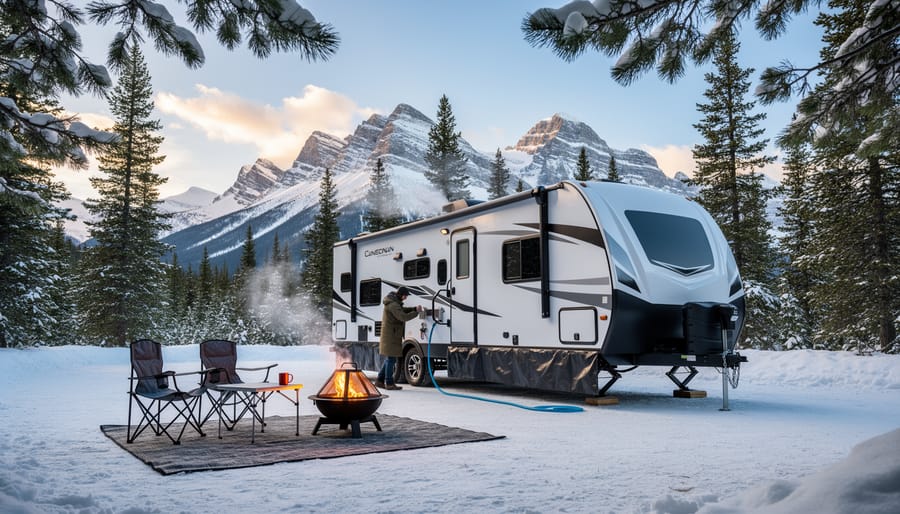
Canada doesn’t have just one kind of weather. In a single trip you can go from a sunny afternoon to a frosty morning, and that swing is exactly what domestic builders design around. If you’re planning plenty of camping in Canada a trailer built with that reality in mind can make shoulder-season trips a lot more comfortable.
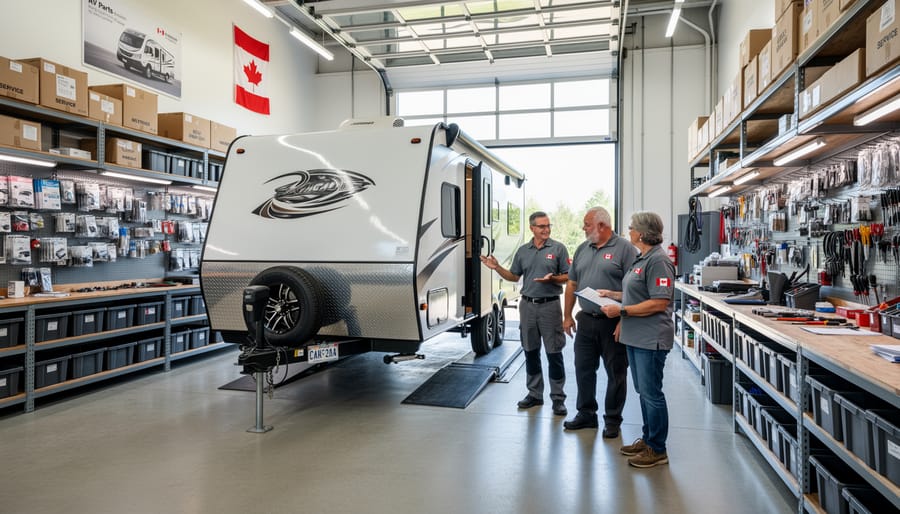
Here’s where Canadian-built trailers tend to shine. Many come with cold-weather packages, things like better insulation, enclosed or heated tank areas, and well-routed ducting. Local dealer and service networks also matter more than people expect. When a furnace acts up in October, a technician an hour away beats a part shipped from across the border. Parts availability follows the same logic, since builders and dealers here stock what Canadian owners actually need. Construction that meets CSA standards adds another layer of confidence.
I learned this one chilly evening at a quiet campground, watching neighbours in a well-sealed trailer stay cozy while my gear froze solid. Lesson noted.
Imported brands can be great too, and plenty of travellers happily tow them across the country. This isn’t about picking sides. It’s about knowing what you’re getting.
Expert tip: Ask what “four-season” really means for the specific model you’re considering. Does it include insulated floors and walls, heated holding tanks, and ducting that reaches the underbelly? One builder’s “four-season” can be another’s “three-season with extras,” so get the details in writing.
Canadian RV Trailer Manufacturers Worth Knowing
Lightweight and Teardrop Builders for Smaller Tow Vehicles
Canada has a long tradition of building small, lightweight trailers, and if you’re pulling with an SUV, a crossover, or a half-ton truck, that’s good news. Lightweight and fiber-resin builders are where you’ll find the most tow-friendly options, so confirm each trailer’s weights against your vehicle’s rated capacity before you fall in love with a floor plan.
Fiber-resin (often called molded fiberglass) trailers deserve a close look. Their one-piece shells resist leaks and tend to hold up well through freeze-thaw cycles, which matters when your camping season runs from May snowmelt to October frost. Teardrops and compact ultralights go even smaller, offering a bed, a rear galley, and not much else. The idea is that you live outside and sleep inside, which suits a lot of travelers just fine.
If you’re already into van life, you may find this style familiar. Plenty of people want the smaller footprint and simplicity of a van but also want a base camp they can park and leave behind. A little trailer gives you that: unhitch, set up camp, and then take your tow vehicle off to explore a trailhead or a town without packing up your whole home.
I learned the appeal on a trip where we pulled a compact trailer behind a mid-size SUV into a provincial park that was almost fully booked. The remaining sites were narrow, tucked between trees, with tight turns. A big rig would’ve turned that into a stressful backing-up ordeal. We slid in on the first try, and I’ve been a convert ever since.
Quick tip: check dry weight, tongue weight, and your vehicle’s towing capacity, and leave yourself a margin. Then contact the manufacturer directly to confirm what’s currently being built, since models and specs change.
Family-Sized Travel Trailers Built for Longer Seasons
When your crew grows past two people, a bigger trailer stops being a luxury and starts being a necessity. Canada has builders that focus on mid-to-large travel trailers designed for families, with bunkhouse floor plans, separate sleeping zones, and enough storage to keep a week’s worth of gear from taking over the living space. These rigs tend to shine for road trips that stretch across provinces and for owners who want to camp well into the shoulder seasons.
Layout is the first thing to look at. A bunkhouse model gives kids their own corner, which means parents can actually sit up with a coffee after lights out. Check how the beds convert, because a bunk that doubles as a dinette is great until you need to unfold it at 6 a.m. Storage matters just as much. Look for exterior pass-through compartments, a roomy pantry, and wardrobe space that suits how your family really packs.
Tanks deserve a close look too. Fresh, grey, and black water capacities decide how long you can stay put before a dump-station run, and bigger families drain them faster than you’d expect. If you camp in cooler weather, ask whether the tanks sit in a heated, enclosed belly, since that’s what keeps them usable on a chilly morning.
Slide-outs add real elbow room, but they also add moving parts and weight. Ask how the seals are built, how easy the mechanism is to operate by hand if power fails, and how the slides affect floor space when they’re closed.
Not every owner keeps moving, and that’s perfectly fine. Plenty of families park a larger trailer at a seasonal site and treat it as their lake getaway for the summer, or settle into one for longer stretches. A comfortable, well-built home base is a wonderful way to enjoy life on wheels, wheels turning or not.
Specialty, Custom, and Small-Batch Builders
Not every great trailer comes off a big assembly line. Canada has a quieter side to its RV scene: small shops and custom builders who put together a handful of units at a time, often to order. If you’ve ever wished you could pick your own layout, swap the dinette for a workspace, or beef up the electrical system for weeks away from a hookup, this is the corner of the market worth exploring.
The appeal is personalization. A small-batch builder will usually talk through how you actually travel before anyone picks up a wrench. Maybe you chase backcountry fishing spots, maybe you need a quiet corner for remote work, or maybe you want enough solar and battery capacity to skip the campground altogether. Expedition-style and off-grid-ready builds tend to focus on things like higher ground clearance, robust frames, larger water and power capacity, and sturdy storage, the stuff that matters when the pavement ends.
If you’re already the kind of person who loves tinkering, this world will feel familiar. Plenty of travelers in our community start with a stock trailer and gradually make it their own, the same spirit behind many van life projects. A custom builder simply lets you bake those ideas in from day one instead of retrofitting later.
A few honest trade-offs are worth knowing. Custom work often means waiting in a build queue, and service may involve a call to the shop rather than a quick drop-in at a big dealership. My tip: ask any small builder how they handle warranty questions, where you’d get parts, and whether they can point you to a mobile tech near your usual routes. Then confirm current build options and timelines directly with them, since those details change.
For many travelers, a trailer that fits their life exactly is worth the extra conversation.
How to Choose the Right Canadian-Built Trailer for Your Trip Style
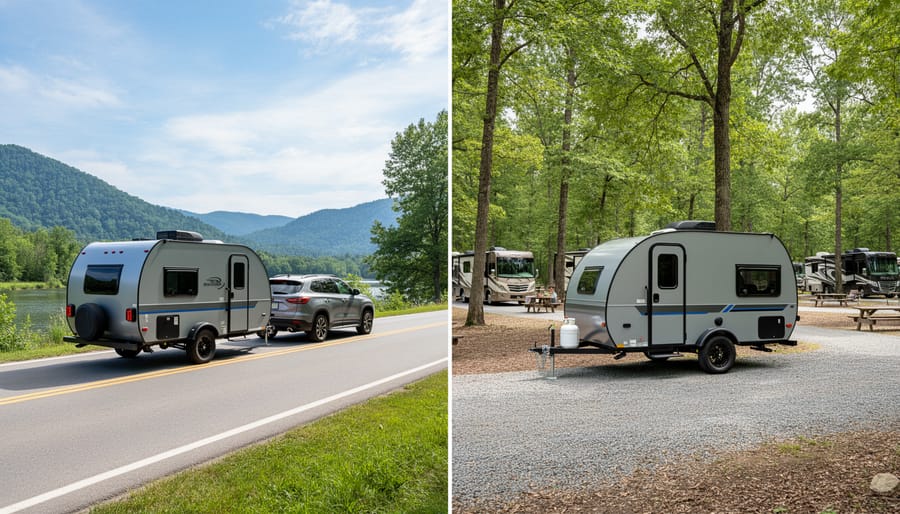
Choosing a trailer starts with your tow vehicle, not the floor plan. Find your vehicle’s towing capacity in the owner’s manual, then compare it to the trailer’s GVWR, which is the gross vehicle weight rating, or the most the trailer can weigh fully loaded. Dry weight is what it weighs empty off the factory floor, and it’s always lower than what you’ll actually tow once you add water, propane, bikes, and groceries.
Tongue weight is the downward push the trailer puts on your hitch, usually around 10 to 15 percent of the loaded trailer weight. Too little and the trailer sways. Too much and your steering gets light. Check it before you commit.
Expert tip: leave a safety margin of at least 15 to 20 percent under your tow rating. Hills, headwinds, and mountain passes will thank you. Visit a dealer in person, hitch up if they’ll let you, and walk through the trailer with your whole crew.
Next, picture where you’ll actually camp. Provincial parks often have tight sites and size limits, backcountry roads favour compact, sturdy rigs, and big-city campgrounds can handle larger trailers with full hookups. Think about season length too. If you’re out in shoulder season, ask what “four-season” really means for that model. Then count your sleepers honestly, and set a budget that includes the upkeep. A simple RV maintenance list will show you what owning one really involves.
Here’s a quick checklist to bring along:
- Does the tow rating comfortably cover the trailer’s loaded GVWR?
- Is the insulation, heating, and tank protection truly four-season ready?
- Does the floor plan fit how your family sleeps, cooks, and stores gear?
- Is there a dealer or service network within reach of your usual routes?
- What do the warranty coverage and resale outlook look like?
Take your time with these answers. The right trailer feels easy to tow, easy to live in, and easy to look after.
Common Questions About Canadian RV Trailer Manufacturers
If you’re still weighing options, these are the questions I hear most from fellow travelers. The answers stay general on purpose, since models and prices change from year to year.
Are Canadian-built trailers better for winter?
Many are designed with cold shoulder seasons in mind, but “four-season” means different things from one builder to the next. Ask about insulation, heated tanks, and ducting for the exact model you’re eyeing.
Can I buy one if I live in the U.S.?
Often, yes, though how it works depends on the builder and its dealer network. Contact the manufacturer directly and ask about cross-border sales, paperwork, and warranty coverage before you commit.
How do I find service for a smaller manufacturer?
Start by asking the builder who they recommend, then check owner groups and forums for shops people trust. Many small makers will walk you through repairs by phone, and standard parts like axles and appliances can usually be serviced almost anywhere.
Can a small SUV tow a Canadian-built lightweight trailer?
Sometimes, especially with teardrops and compact fiber-resin models. Check your vehicle’s tow rating and the trailer’s loaded weight, and leave yourself a healthy safety margin.
Where should I check current models and specs?
Go straight to each manufacturer’s website or a local dealer. They have the up-to-date lineups, weights, and availability.
If you take one habit from this section, make it the in-person visit. Sitting inside a trailer, hitching it up, and asking the people who build or sell it your own questions will tell you more than any spec sheet. And don’t worry if your situation doesn’t match anything above. There’s no single right way to roll, so ask away and trust your gut.
At the end of the day, a Canadian-built trailer is just a ticket to more time out there, whether that’s a cold September weekend in the Kootenays or a long summer loop out to the Maritimes. The best rig is the one that fits your tow vehicle, your season, and the way you like to travel, and that goes for teardrop folks, family haulers, and van lifers hauling a detachable home base alike.
Once you’ve got your rig home, a little routine care goes a long way. Our guide to keep tanks protected and the rest of your trailer in shape is a great place to start. Then tell us about your own setup in the comments. What are you towing, and where has it taken you? Swap stories, borrow ideas, and keep exploring other Life on Wheels reads. There’s room for every kind of traveller on this road.